In this video, I walk and talk about my experience with the Altra Escalante, and how you can repurpose old running shoes. 
Altra: Amazon.com | ALTRA Men’s Escalante 4 Road Running Shoe, Black/Iridescent, 7 | Road Running
In this video, I walk and talk about my experience with the Altra Escalante, and how you can repurpose old running shoes. 
Altra: Amazon.com | ALTRA Men’s Escalante 4 Road Running Shoe, Black/Iridescent, 7 | Road Running
Peter goes on a solo podcast and discusses how he got into nearly 10 years ago, his first race, his first marathon, his first ultramarathon, nutrition, here, training, and plans.
Resources:
Races:
In this video, I unboxed my first pair of Altra Vanish Carbon shoes!
First steps in my Altra Vanish Carbon shoes.
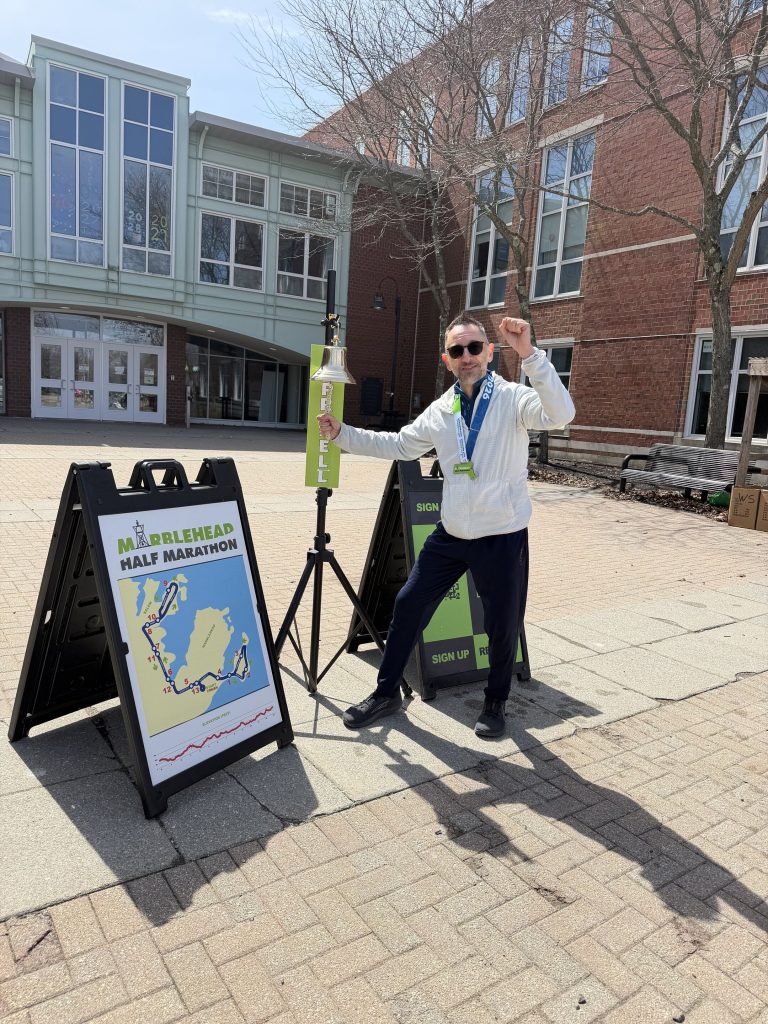
This weekend I had the pleasure(?) of running the Marblehead Half Marathon. Not only did I run it, I set a new personal best! My previous record for 13.1 miles was during the Derry Cheap Marathon in 2022, when I hit the halfway point at around 2:02. I finished Marblehead in 1:58:23, so that’s my new time to beat.
TL;DR
The course was well marked. They started on time. Parking was plentiful. Instructions were clear. Aid stations were spaced well. The food at the end was rewarding, and included chicken sliders, donuts, and even Athletic Brewing NA beers! The ocean views were pleasant.
The Gear
In addition to my Garmin Forerunner 965, I wore my Salomon Adv Skin 12 and [altra_escalante]. Between me and the Altras were a pair of Coolmax socks. Up top, I had a Port Authority cap. Even though it wasn’t hot – the temps were in the 40s the whole time – the cap kept the sun and sweat out of my eyes. I also “wore” Neutrogena Sun Screen, which did a fine job keeping me safe from the nasty UV rays that want to prematurely age my skin.
Even though I did not carry water, as aid stations were plenty, I found the Salomon Adv Skin 12 useful for carrying my phone, airpods, and energy gel.
The Course
The course itself was a bit hillier than other road halfs I have done, but not unmanageable. I used my Garmin Forerunner 965‘s PacePro to set a pacing strategy. I found its in-race guidance very helpful and not at all annoying. It adjusted my targets every mile based on my previous splits, which was helpful.
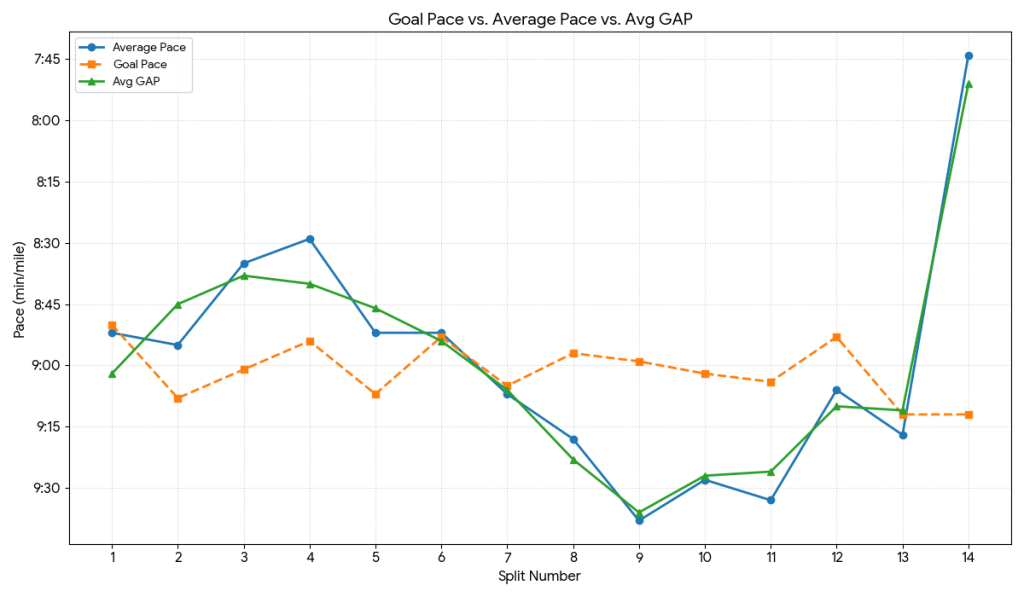
I would absolutely run this race again. 👍
The Training
Last year I joined Coach Lindsay Parry’s coaching program to prepare for my first 50 miler. I used their program again to train for Marblehead this year. They helped me balance speed work, long runs, and recovery. They also set time trials and adjusted my training paces based on their results. Thanks in no small part to them, and my coach at Fit In New England, I was able to shave nearly 4 minutes off my fastest 13.1 mile segment (and nearly 7 minutes off my fastest 13.1 mile race in 2022)!






Last year I upgraded from my old Nathan hydration vest to a Salomon Advance Skin 12. This was a worthy upgrade! While both feature breast pockets for smaller bottles on the chest as well as an old school, Camelbak style bladder in the back pouch, the main difference is the elastic straps on the Salomon.
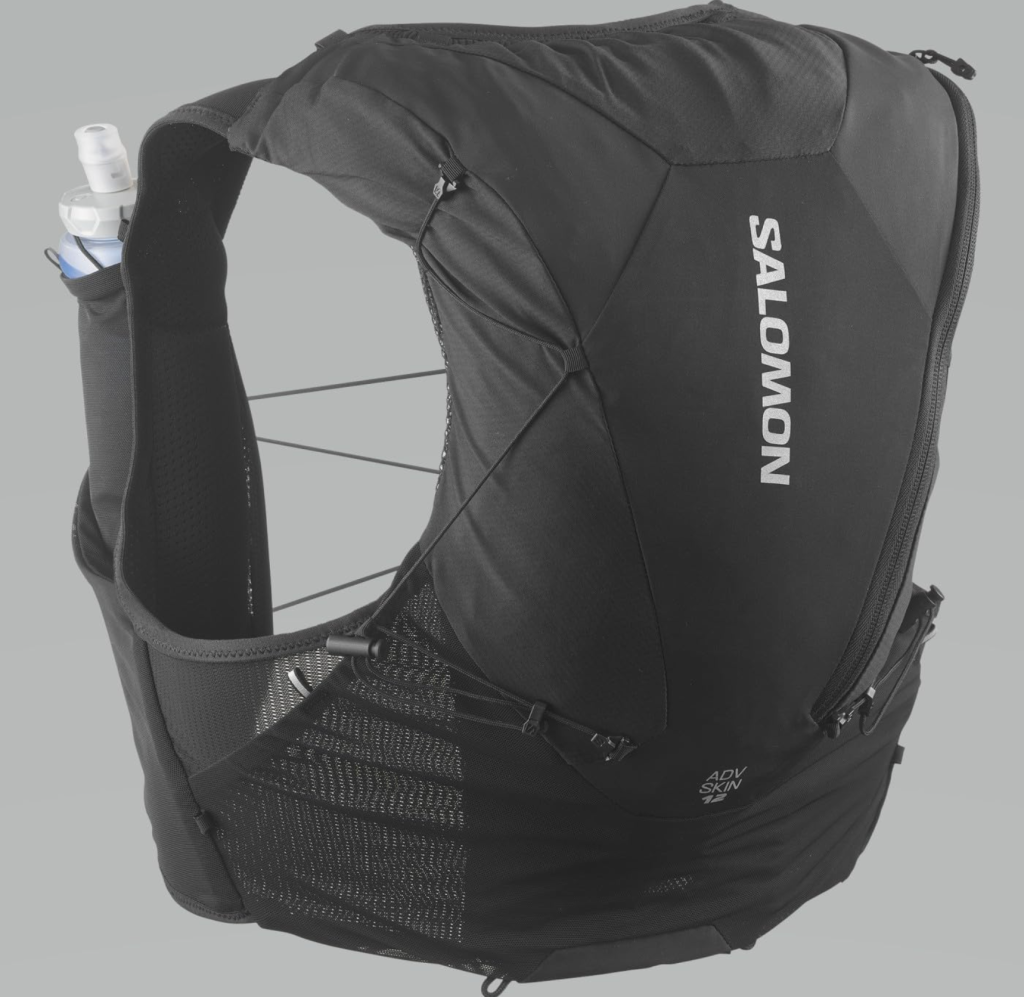
Salomon Advance Skin 12 Hydration Vest
For me, this is a game changer. The old vest I had would bounce around after I had drunk from it, or would be too tight if I added things to its pouches.
Another feature of the Advance Skin 12 is the adjustable straps, which connect across the chest in one to three places, depending on your choices. I can also usually do this by feel without having to look at the connection points. This is useful when running and not wanting to take my eyes off the trail or path I’m on.
The Advance Skin 12 has allowed me to carry plenty of water. I used this on my 52 mile ultra in 2025, and it kept me plenty hydrated between aid stations. Normally I’ll use it to carry two water bottles on my chest, an iPhone, AirPods, tissues, snacks, sunscreen, hand sanitizer, and sometimes a few other knickknacks. For anything longer than 10 miles, I’m almost certain to bring this along for the run.
A couple of months ago I purchased the Polar Verity Sense. This is a Bluetooth (and ANT) heart rate monitor. I use it for running, generally paired to my Garmin Forerunner 965. The device has many special features. I have not tested them all and probably never will. Here’s a summary of the features I have used over the last couple of months.
Background
My weekly routine generally includes running, walking, yoga, mobility, and strength training. In the nicer months – when I am not training for a running race – cycling, mountain biking, kayaking, and swimming may be included as well. In general, I only use an external heart rate monitor (HRM) while running. This is because I find the built in sensors on an Apple Watch or Garmin Forerunner to be perfectly adequate for my purposes.
But when it comes to running, that’s just not the case. I have seen results that are wildly different from reality. This is especially true on the Apple Watch, which frequently will have my heart rate in the “he should be dead by now” range when I’m warming up with a light jog. On the flip side, on occasion my Garmin seems to have underestimated, and tells me I’m in Zone 1 when I’m gasping for air and working pretty hard.
Enter the solution – a heart rate monitor worn on the upper arm. Before you stop me and say “But Peter, a chest strap is the only way to accurately measure your heart rate during intense exercise,” I know. And I don’t care. Chest straps are a hassle. I find them very uncomfortable. In my testing a couple of years ago I found a chest strap’s results to be within 1% of an HRM worn on my upper arm. I am not a professional or an Olympic athlete. If you tell me I need more accurate results, I will ask you why. Conclusion? I’m perfectly satisfied wearing an HRM on my upper arm. If you’re not, don’t buy the Polar Verity Sense. If you are, read on!
Form Factor
The Polar’s nylon loop strap is very comfortable. Its construction feels better than other bands I have worn over the last several years. It allows for precision adjustment, and doesn’t lock you in to presets like on a plastic band.
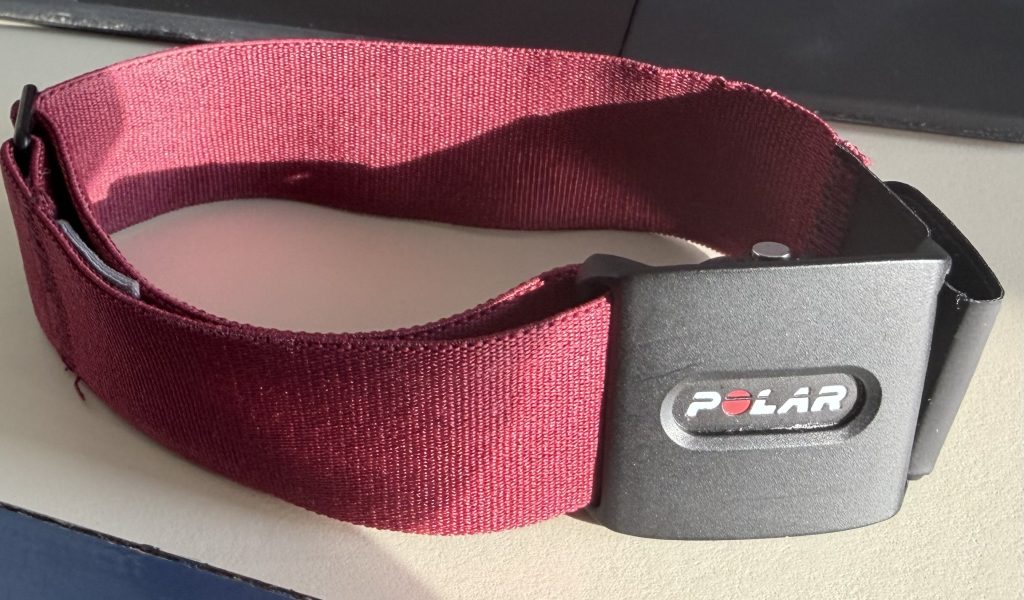
Unlike other units I have owned, the Verity Sense does not include a charging cable. The actual sensor is removable from the strap. This is a requirement for charging via the included USB-A charger. At first I found this extra step somewhat of a nuisance, as there are now three components (a strap, sensor, and charger) to keep track of (and possibly lose) instead of just two (a strap/sensor and a cable). I’ve gotten over this because I do like the small form factor of the charger.
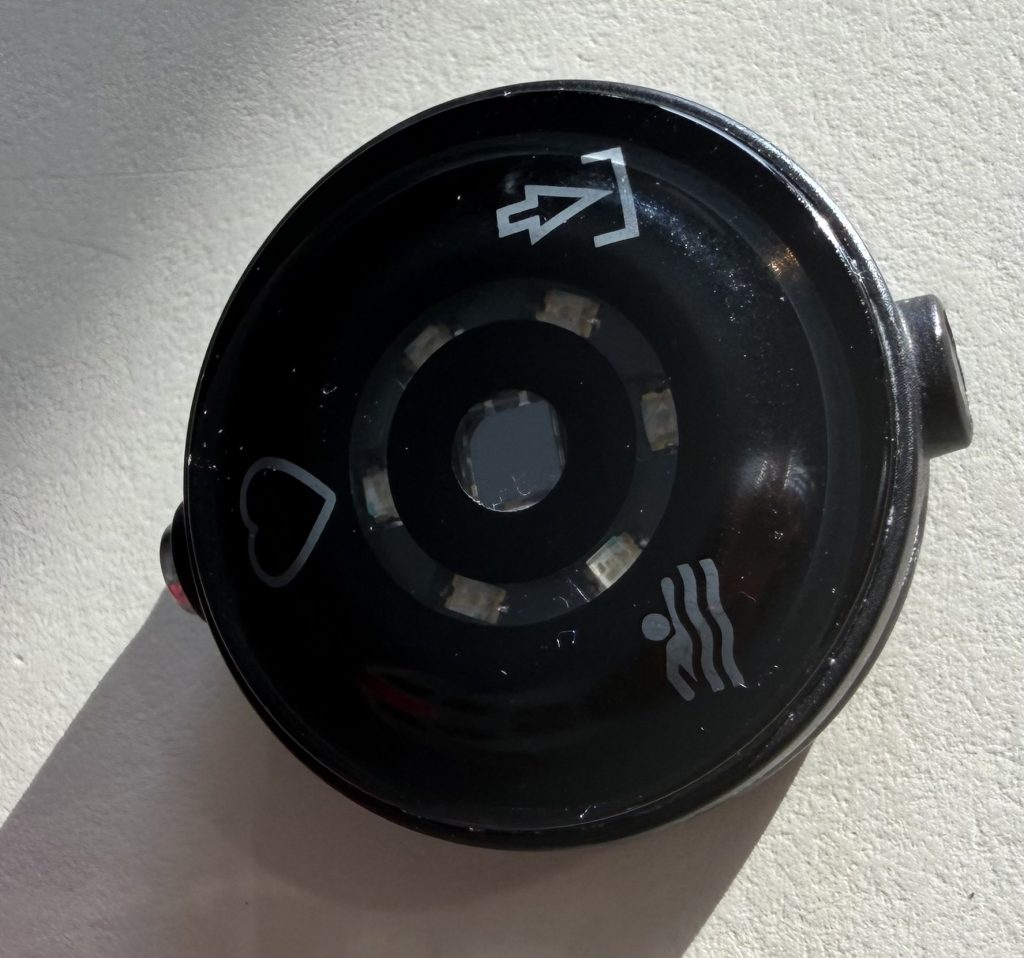
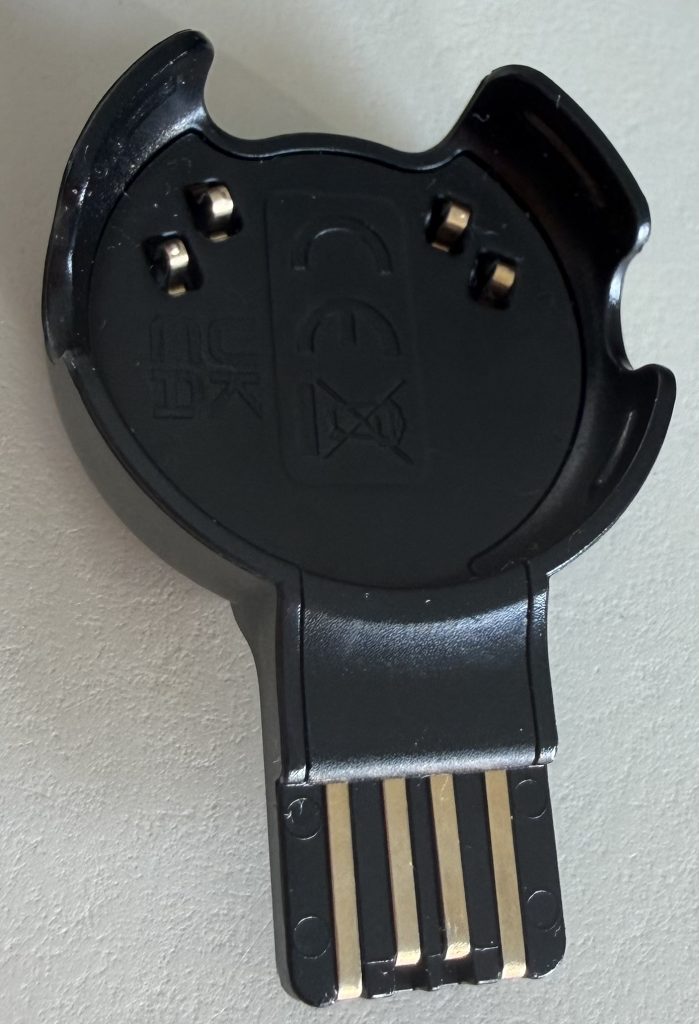
I do not know exactly how long it takes to charge the unit, or exactly how long the battery life really is. What I do know is that I have never had the unit’s battery run out on me. On paper, the battery life is 30 hours. So if I tackle more than a 100 mile race down the road, this may not fit the bill. I don’t have one of those on the schedule yet, so I don’t care.
Daily Use
I have used the Polar Verity Sense for nearly every running workout for the last couple of months. I have paired it to my Apple Watch and my Garmin Forerunner 965. Pairing is simple and works as expected. When powered on and starting a workout on the watch, it has never failed to automatically pair. It’s reliable enough that I don’t have to think about it – I just make sure it’s powered on, start the workout on the watch, and run.
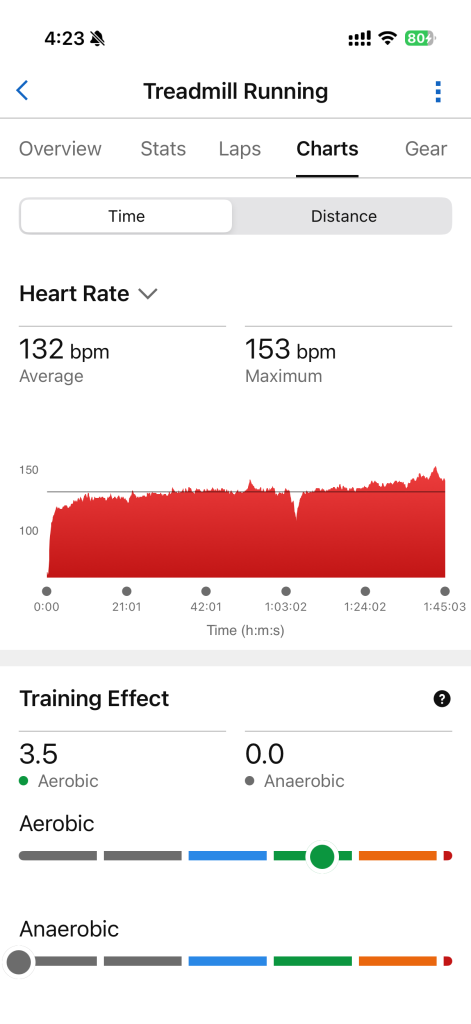
The results are in line with what I expect. I have not had any issues where they varied wildly from what I would expect, as has been the case with Coospo and the built in Apple Watch sensor. As such, I have grown to trust its readings as they “feel more accurate” to me. This could just be a gut sense, but using the “you should be able to carry on a conversation” gauge to see if I am in Zone 2, as well as the “this should feel pretty much like all out effort” for higher zone training, it’s again pretty much where I would expect the readings. They are more consistent, and they do not feel more consistently wrong.
Oddities & Annoyances
The lack of precise (or even ballpark) battery life is a slight annoyance. I have installed the Polar Flow app on my iPhone 17 Pro, and connected via Bluetooth. However the app tells me that as of January 19, the battery life was 64%. That’s interesting, but what is it right now? You know, now – when the sensor is paired to you? No idea. As a result, I recharge it a couple of times a week and don’t really think about the battery life anymore. Still, as a techie, it bothers me when things don’t work, even if they’re just nice to haves.
Update: On March 7 I connected my device to my iPhone and the app displayed its battery life again! I did nothing differently. In fact, I did less then previous attempts where I’d manually synced to try to get the battery life to show. Today it just showed it on its own. Coincidentally, my Garmin Forerunner 965 reported that the external HRM’s battery was low.
This morning during my yoga class, I glanced at my Garmin and saw that my heart rate was 0 BPM. Checking my pulse to make sure I was not dead, I then remembered I had placed the unit on the charger last night. Sure enough, it was charging and paired to the Garmin. I removed it from the charger and it disconnected, immediately switching to my watch’s built in sensor. It seems like the unit should be able to detect when it’s charging and not send HR data at that time.
Things I did Not Test
The Polar Verity Sense can be strapped to your temple when wearing goggles while swimming. I do not remember the last time I used goggles while swimming – I now use mine when cutting onions.
The device can run in a memory mode to store workouts and upload them later. I don’t do this – I track my workouts on my watch.
The device has ANT support and can pair with gym equipment. I don’t do this either.
The device allows you to broadcast your heart rate to any nearby device, like in a class when you want to have it show up on a screen.
The device lets you broadcast your heart rate to two Bluetooth devices at the same time. I haven’t tried this. I think if I did, it would only be to compare the results of tracking a workout in two different apps when getting a new watch, or comparing Apple to Garmin.
Would I Buy It Again?
Yes. As far as I am concerned this device has one job, and it does the job well. I have a sense of peace of mind that I did not get with other HRMs I have used in the past (e.g. Wahoo and Coospo). Maybe it’s because the Polar costs around twice as much and I’m just hopeful that it will last twice as long or longer than the other units I’ve had. 👍
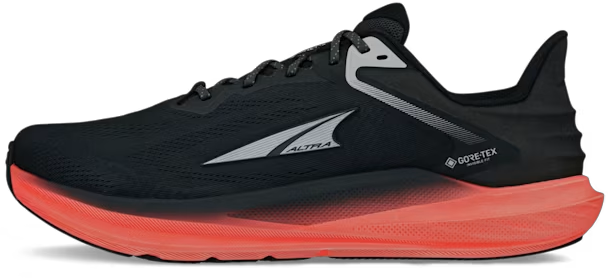
I’ve been a fan of Altra for years now. I started with their Escalante series (2.5, then Racer, then Lone Peak 5, and 7). I currently have two pairs of the Escalante 4, and two pairs of the Torin 8. I’ve been rocking the Altra Torin 8 since last summer. Last fall I purchased the Torin 8 GTX – Gore-Tex version. They’ve become my new standard shoe.
The waterproof aspect of these shoes is a game changer. Whereas I can usually wear wool socks (generally from Injinji) and not be bothered by my feet getting wet, the Torin 8 GTX actually keeps my feet dry. I have been using these for my daily runs and long runs nearly non-stop for the last several weeks, as I’ve been in snowy or rainy environments for most of the month of February. When it’s icy outside, I’ve been strapping a pair of YakTrax Run on the bottom for sure footing.
The GTX model weighs about 1 oz more than the non Gore-Tex model. So if you are sensitive to this you may want to skip them on dry days to avoid that whole extra ounce of weight. Other than that, I haven’t really detected any difference in the shoes.
Both boast zero drop – so the toe and the heel are the same height. While I have backed off on my “barefoot” or “minimalist” requirements, I insist on zero drop for almost all of my shoes.
For my long runs (longer than an hour) on pavement, I generally default to the Torin. They have a generous amount of cushion without feeling wobbly.
As previously covered, I converted from Apple to Garmin in the middle of 2025 prior to my first 50 mile race. I liked the Forerunner 955 Solar enough that I decided to treat myself to an upgrade and bought a Forerunner 965 for the larger, fancier display. Here’s my experience now that I’ve had it for a couple of months.
Overall I give the 965 a strong thumbs up, and would absolutely buy again. The only regret I have relating to the upgrade was not asking enough for the used 955 when I turned around and sold it becuase – now that it’s discontinued – the market price has gone up! This is just further reinforcement that Garmin smartwatches hold their value and typically have lifespans of several years.
I bought the Yaktrax Run last year. Annnd… I rarely used them. Why? Because on most days I just haven’t had to! However this winter has been the one where I finally get some return on my investment in them.
Unlike the Yaktrax Walk and Pro models, which have rubber bands wrapped with steel coils, the Run has tungsten spikes under the ball of the foot.
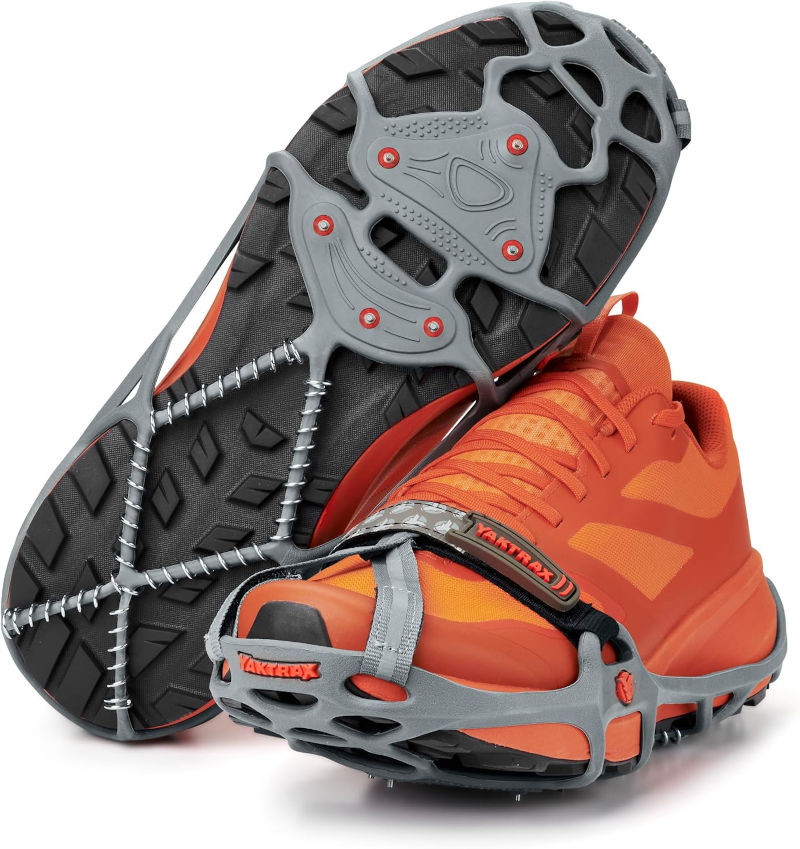
I’ve had two issues I’ve had with these units. The first is with the nylon and Velcro straps at the toes. Before I complain too much, it was my fault. I did not have them mounted properly to my shoes. As such, the nylon strap crept down under the front toe. After running on that for 5 mile, it broke. Since Yaktrax’ warranty had expired, I fixed it with some zip ties. Problem solved.
The other issue I have is that the forward-most tungsten spike on one foot has gotten jammed so it points slightly backwards. This is likely because of repeated “foot dragging”. I have not really noticed an impact on performance as a result.
If you haven’t used Yaktrax or comparable traction devices for ice, let me say they are an absolute game changer. I can run on the slickest, iciest surfaces with confidence in these. It’s a little unnerving as you get started, taking those tentative first steps, until it sinks in to your brain “hey! I can just run!”
The feel of running on these does take a little getting used to. It’s not unlike strapping on a pair of boots and running on them for the first time. They weigh just under 5 ounces. While it’s not a lot, it’s not nothing, especially given that my Altra Torin 8 GTX weigh 11.5 ounces, and I can definitely feel the difference.
Also, you won’t want to wear these on primarily non-icy surfaces, whether indoors or out. Outdoors, you’re just wearing down the spikes and making yourself less stable with the added height and weight. Indoors you’re wearing a set of skates on laminate or tile floors, and “leaving your mark” if they’re wood.
Putting them on and off is straightforward, but I find it easiest to do while sitting down. If it’s wet and snowy outside, you may not want to do this, so I usually try to commit before the run. It’s just not fun to stop to have to put them on later, and if you don’t have a waterproof pouch to put them in, carrying them after taking them off is a hassle.
Overall, I give these a thumbs down. If you want to run outside and it’s icy, and you’re afraid of a slip and fall, these will change your running game. But they just do not last! I don’t know how long they’re expected to last, but for this price, my verdict is they do not last long enough.
UPDATE: As of March 2, 2026, I’m not using this any more. One of the tungsten spikes has broken, along with one of the toe straps. Given the relatively – in my opinion – low mileage I have on them, I am not satisfied and am going to evaluate a pair of Kahtoola Nano Spikes.