A couple of months ago I purchased the Polar Verity Sense. This is a Bluetooth (and ANT) heart rate monitor. I use it for running, generally paired to my Garmin Forerunner 965. The device has many special features. I have not tested them all and probably never will. Here’s a summary of the features I have used over the last couple of months.
Background
My weekly routine generally includes running, walking, yoga, mobility, and strength training. In the nicer months – when I am not training for a running race – cycling, mountain biking, kayaking, and swimming may be included as well. In general, I only use an external heart rate monitor (HRM) while running. This is because I find the built in sensors on an Apple Watch or Garmin Forerunner to be perfectly adequate for my purposes.
But when it comes to running, that’s just not the case. I have seen results that are wildly different from reality. This is especially true on the Apple Watch, which frequently will have my heart rate in the “he should be dead by now” range when I’m warming up with a light jog. On the flip side, on occasion my Garmin seems to have underestimated, and tells me I’m in Zone 1 when I’m gasping for air and working pretty hard.
Enter the solution – a heart rate monitor worn on the upper arm. Before you stop me and say “But Peter, a chest strap is the only way to accurately measure your heart rate during intense exercise,” I know. And I don’t care. Chest straps are a hassle. I find them very uncomfortable. In my testing a couple of years ago I found a chest strap’s results to be within 1% of an HRM worn on my upper arm. I am not a professional or an Olympic athlete. If you tell me I need more accurate results, I will ask you why. Conclusion? I’m perfectly satisfied wearing an HRM on my upper arm. If you’re not, don’t buy the Polar Verity Sense. If you are, read on!
Form Factor
The Polar’s nylon loop strap is very comfortable. Its construction feels better than other bands I have worn over the last several years. It allows for precision adjustment, and doesn’t lock you in to presets like on a plastic band.
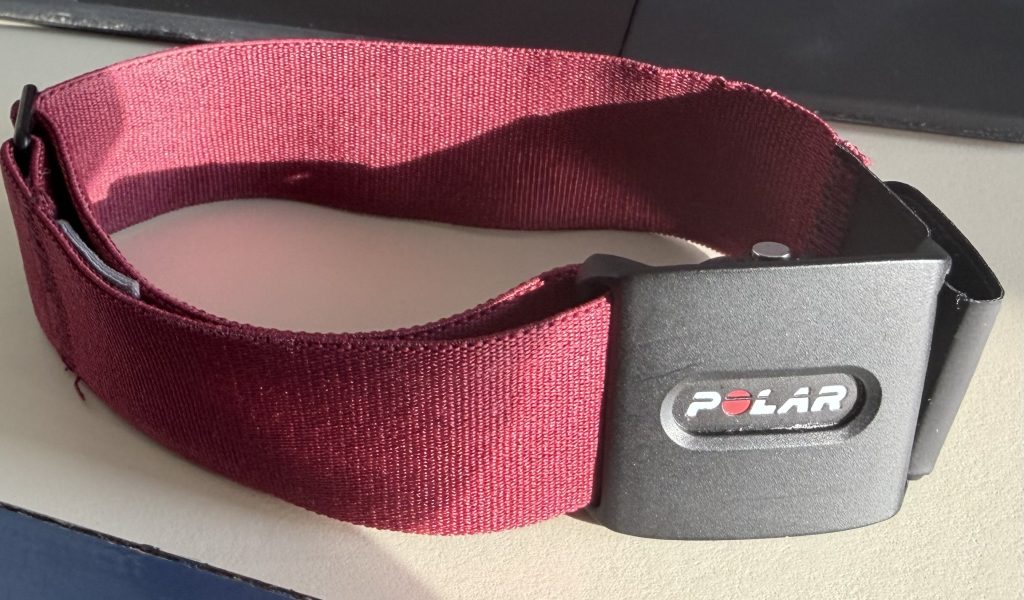
Unlike other units I have owned, the Verity Sense does not include a charging cable. The actual sensor is removable from the strap. This is a requirement for charging via the included USB-A charger. At first I found this extra step somewhat of a nuisance, as there are now three components (a strap, sensor, and charger) to keep track of (and possibly lose) instead of just two (a strap/sensor and a cable). I’ve gotten over this because I do like the small form factor of the charger.
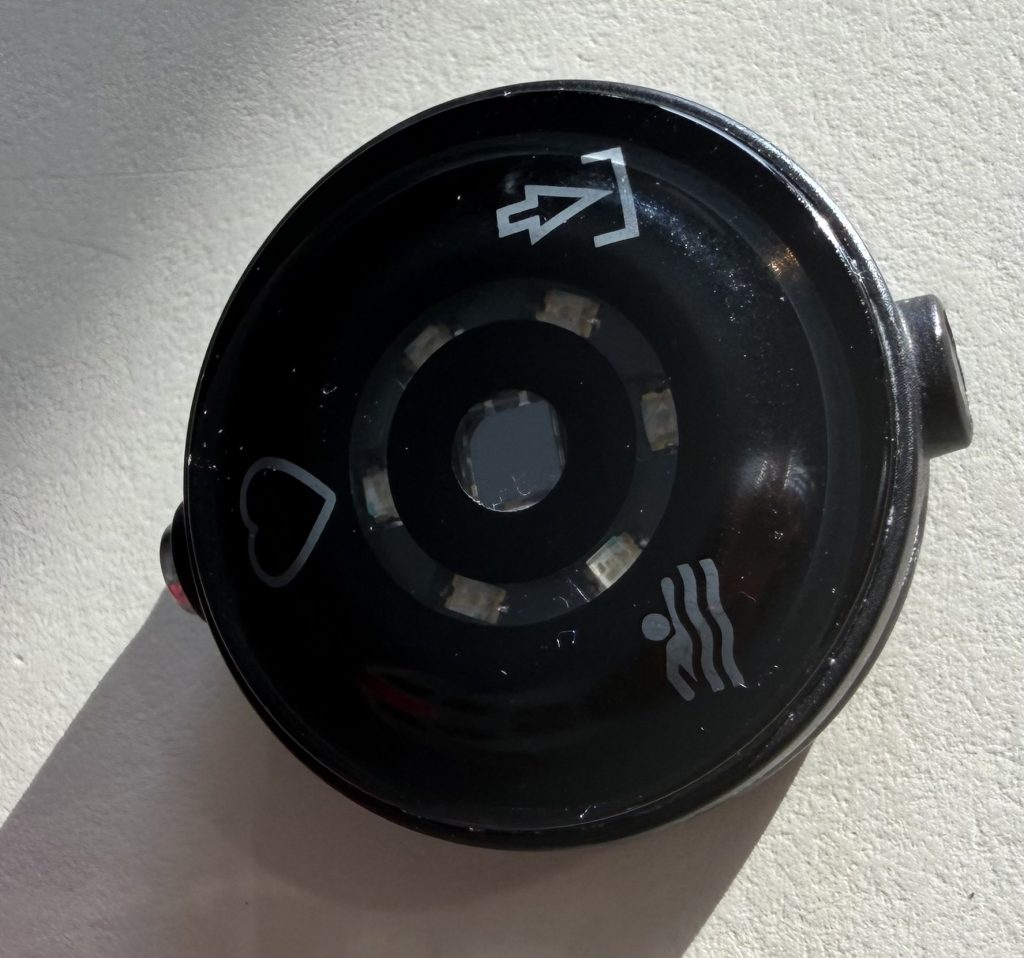
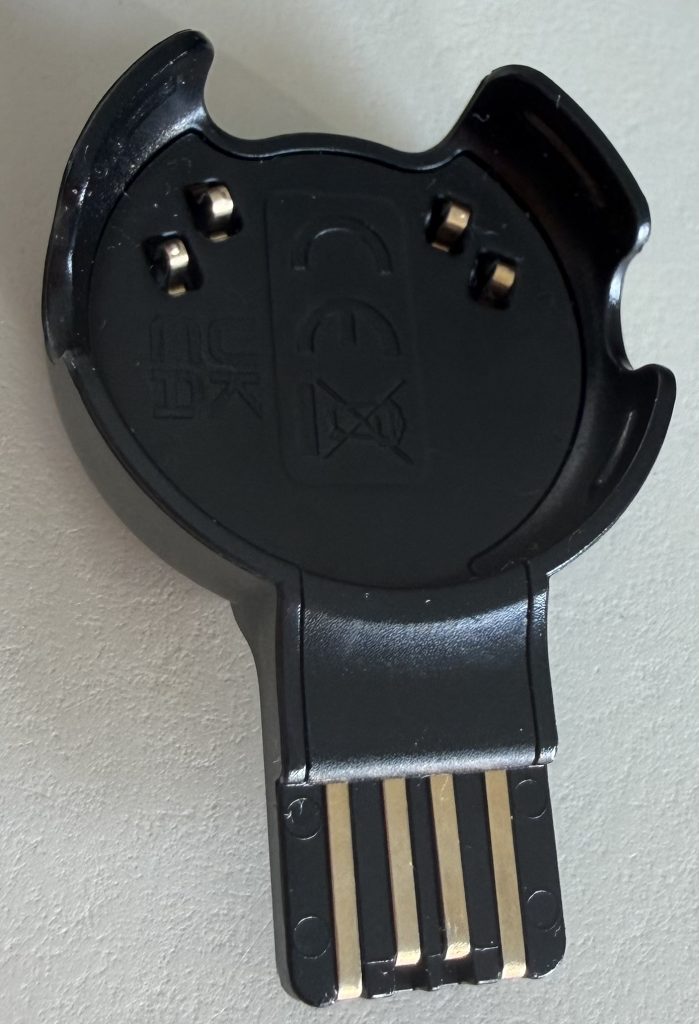
I do not know exactly how long it takes to charge the unit, or exactly how long the battery life really is. What I do know is that I have never had the unit’s battery run out on me. On paper, the battery life is 30 hours. So if I tackle more than a 100 mile race down the road, this may not fit the bill. I don’t have one of those on the schedule yet, so I don’t care.
Daily Use
I have used the Polar Verity Sense for nearly every running workout for the last couple of months. I have paired it to my Apple Watch and my Garmin Forerunner 965. Pairing is simple and works as expected. When powered on and starting a workout on the watch, it has never failed to automatically pair. It’s reliable enough that I don’t have to think about it – I just make sure it’s powered on, start the workout on the watch, and run.
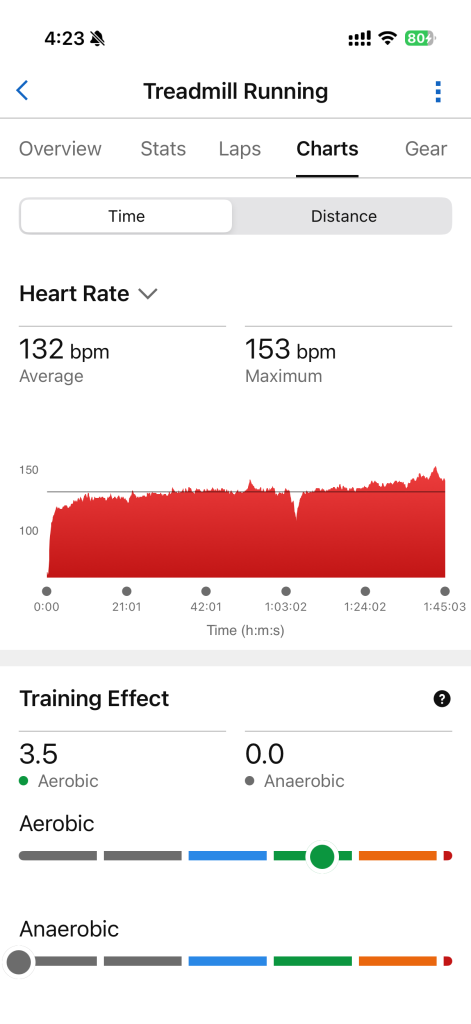
The results are in line with what I expect. I have not had any issues where they varied wildly from what I would expect, as has been the case with Coospo and the built in Apple Watch sensor. As such, I have grown to trust its readings as they “feel more accurate” to me. This could just be a gut sense, but using the “you should be able to carry on a conversation” gauge to see if I am in Zone 2, as well as the “this should feel pretty much like all out effort” for higher zone training, it’s again pretty much where I would expect the readings. They are more consistent, and they do not feel more consistently wrong.
Oddities & Annoyances
The lack of precise (or even ballpark) battery life is a slight annoyance. I have installed the Polar Flow app on my iPhone 17 Pro, and connected via Bluetooth. However the app tells me that as of January 19, the battery life was 64%. That’s interesting, but what is it right now? You know, now – when the sensor is paired to you? No idea. As a result, I recharge it a couple of times a week and don’t really think about the battery life anymore. Still, as a techie, it bothers me when things don’t work, even if they’re just nice to haves.
Update: On March 7 I connected my device to my iPhone and the app displayed its battery life again! I did nothing differently. In fact, I did less then previous attempts where I’d manually synced to try to get the battery life to show. Today it just showed it on its own. Coincidentally, my Garmin Forerunner 965 reported that the external HRM’s battery was low.
This morning during my yoga class, I glanced at my Garmin and saw that my heart rate was 0 BPM. Checking my pulse to make sure I was not dead, I then remembered I had placed the unit on the charger last night. Sure enough, it was charging and paired to the Garmin. I removed it from the charger and it disconnected, immediately switching to my watch’s built in sensor. It seems like the unit should be able to detect when it’s charging and not send HR data at that time.
Things I did Not Test
The Polar Verity Sense can be strapped to your temple when wearing goggles while swimming. I do not remember the last time I used goggles while swimming – I now use mine when cutting onions.
The device can run in a memory mode to store workouts and upload them later. I don’t do this – I track my workouts on my watch.
The device has ANT support and can pair with gym equipment. I don’t do this either.
The device allows you to broadcast your heart rate to any nearby device, like in a class when you want to have it show up on a screen.
The device lets you broadcast your heart rate to two Bluetooth devices at the same time. I haven’t tried this. I think if I did, it would only be to compare the results of tracking a workout in two different apps when getting a new watch, or comparing Apple to Garmin.
Would I Buy It Again?
Yes. As far as I am concerned this device has one job, and it does the job well. I have a sense of peace of mind that I did not get with other HRMs I have used in the past (e.g. Wahoo and Coospo). Maybe it’s because the Polar costs around twice as much and I’m just hopeful that it will last twice as long or longer than the other units I’ve had. 👍
Leave a Reply
You must be logged in to post a comment.